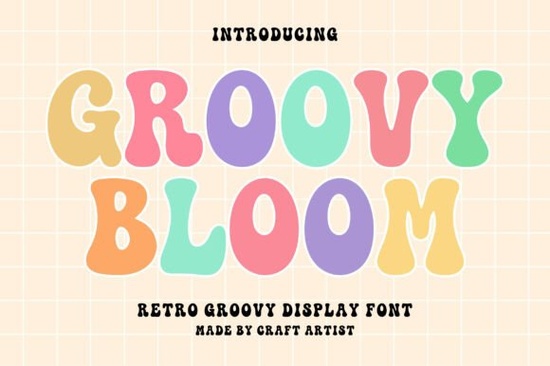
If you are looking for a typeface that instantly adds warmth and nostalgia to a layout, Groovy Bloom Font delivers exactly that kind of vintage charm without feeling dated. This display font uses thick, rounded shapes and smooth terminal curves that read clearly at any size. Crafters and print-on-demand sellers often grab it first when they need a quick way to make apparel graphics, sticker designs, or social media banners feel friendly and approachable. Instead of spending hours adjusting spacing, the built-in letterforms already carry a balanced rhythm that keeps text legible even when stretched across wide headers.
Why does a retro display font work well for print-on-demand?
The appeal lies in how quickly these styles communicate mood. Shoppers scan marketplaces in seconds, and a single headline can decide whether someone clicks. Bold lettering handles fabric textures and glossy finishes better than thin scripts. You also get flexibility when mixing styles. A heavy display face pairs neatly with clean sans-serifs for subtitles, leaving space around each curve to prevent ink bleed on direct-to-garment prints. Sellers report fewer complaints because the artwork stays readable after washing.
Where should you actually use these curves?
- Weekend market banners and booth signage
- Instagram story templates with short quotes
- Vinyl decal layouts for water bottles or laptops
- Logo mark backgrounds where color blocks meet text
- Embroidery digitizing guides for small business patches
How do you pair it with other typography elements?
Pairing requires restraint, especially when the main typeface carries strong personality. Set your primary headline large, then drop secondary lines into a lighter weight for clear hierarchy. Lean toward geometric sans-serifs or straightforward slabs for supporting text. Those choices keep the layout grounded while letting the playful curves stay the focal point. You will find smoother results when you adjust tracking slightly wider than usual, giving each swollen shape room to breathe. When working in cutting software, lock your layer order early so alignment tools never accidentally shift curved terminals.
For those who prefer cleaner edges over rounded forms, exploring options like Twinklix Font Display Fonts or Rabios Font Display Fonts gives you a quick way to compare structural vibes. Meanwhile, Americana-inspired typefaces such as Americant Font Display Fonts or Western Block Font Display Fonts round out a broader library for themed branding. If your audience skews younger or leans toward educational materials, Child Humble Font Display Fonts offers a softer contrast that still reads loud enough for classroom posters.
What technical details should you verify before installing?
Licensing terms and character coverage matter more than visual previews suggest. Confirm whether the package includes full punctuation, currency symbols, and extended Latin characters if you plan to publish internationally. A complete set saves you from manually swapping glyphs later, which cuts down on frustrating export errors in design programs. The downloaded archive typically contains OpenType files that support alternate shapes, though modern software handles those automatically once you open the glyph panel. Remember to test scaling limits early; display typefaces look best between two and four inches tall depending on your final medium.
You can always double-check the official character map and licensing notes by visiting the creator’s page through a Groovy Bloom Font search result. Keeping that reference handy helps you spot font updates or bundled bonus assets before committing to a commercial project.
Which similar fonts might fit your current project?
Curve density dictates suitability for different niches. Outdoor gear benefits from heavier block faces that resist fading. Home decor brands pair softer terminals with pastel palettes. Testing two variations side by side in a cheap print proof reveals spacing gaps that digital screens hide. Adjust line height carefully when stacking words, since overlapping bowls clash if the baseline sits too low. Small tweaks like raising ascenders or tightening diagonal strokes fix collisions without losing the hand-drawn feel.
Before you start your next mockup, run through this quick preparation list:
- Open the file in a supported vector program and ungroup all paths
- Check the glyph panel for missing accents or special characters
- Set tracking to roughly 50–100 units above default
- Export your headline as both PDF for print and transparent PNG for web
- Preview the design on a neutral background before applying brand colors
Taking five minutes to verify these steps now prevents resizing headaches later. Swap your placeholder sketch for a finished layout, test one garment sample, and watch how the curved letters catch the light.
Explore Design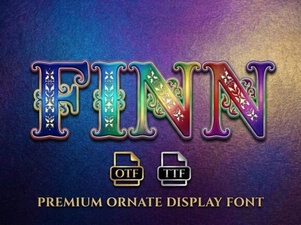 Finn Font: Design Ideas for Modern Projects
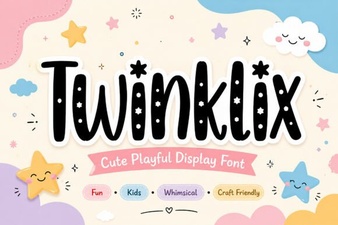 Twinklix Font: Creative Design Projects & Ideas
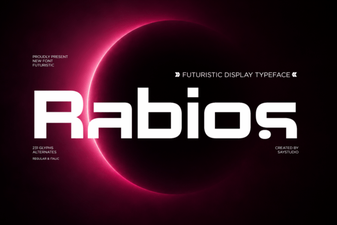 Rabios Font: Download & Creative Projects Guide
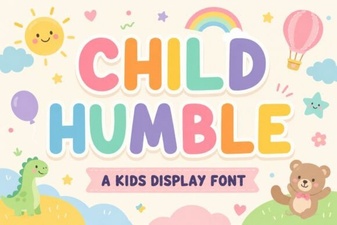 Crafting Projects with Humble & Playful Fonts
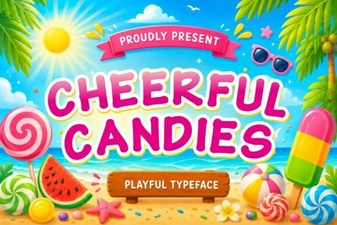 Cheerful Candies Font for Fun Web Design
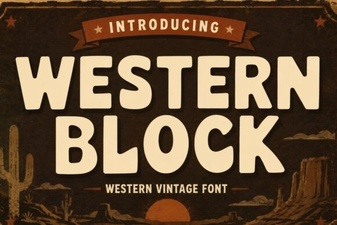 Western Block Fonts for Design Projects