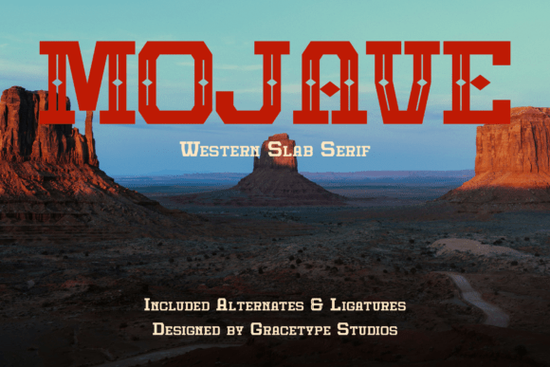
If you need a typeface that commands attention without sacrificing readability, Mojave Font delivers exactly that kind of structural authority. Designed as a premium heritage slab serif, this heavy display face relies on massive block letters, thick vertical stems, and sharp geometric transitions to create a look that feels both vintage and editorial. Whether you are designing labels for a craft brewery, creating rugged outdoor gear graphics, or setting high-contrast headlines for social media, this font provides the visual weight needed to make your project stand out. The architecture behind each letterform ensures that your message reads clearly even when scaled down for tags or zoomed out for banner displays.
Why does this style work so well for brand identity?
Strong typographic foundations rely on clear contrast and consistent rhythm. A heavy slab serif cuts through clutter by offering wide counters, unyielding serifs, and a balanced x-height that prevents visual fatigue. When you pair those traits with strict capitalization, you get a layout grid that feels intentional and grounded. Crafters and small business owners often notice faster recognition rates because the eye scans large, uniform shapes much quicker than thin or ornamental scripts. The clean lines also age gracefully across different mediums, which means your logo will print sharply on vinyl stickers and translate easily to embroidery or screen printing.
Where should you apply this display typeface?
The versatility of a robust all-caps family extends far beyond simple posters. You can adapt it to fit several commercial niches without losing its core character. Consider these proven applications:
- Vintage-inspired brewery labels where thick lettering matches the weight of kraft paper and wax seals
- Rugged apparel collections that need back prints or chest patches to read clearly from a distance
- Artisanal packaging for coffee, soap, or hardware tools where shelf visibility matters
- Adventure magazine headers that demand immediate impact before readers scan smaller body copy
- Automotive and hardware branding systems requiring a disciplined, authoritative visual hierarchy
How do you balance heavy lettering with surrounding elements?
Pairing a dominant display font requires restraint. Because the letters carry so much visual mass, your supporting graphics should stay simple and leave room for breath. Stick to limited color palettes, muted textures, or subtle background patterns that complement rather than compete with the typography. If you layer additional text underneath or beside it, choose a light sans-serif or a highly spaced monospaced style to create clear contrast. Remember that space is your strongest tool; tight kerning on a font this thick will quickly turn into a wall of ink that confuses the eye.
What technical details matter for production readiness?
Before you finalize any mockup, verify the file structure and licensing terms. A well-constructed digital font includes complete OpenType features, multiple weight variants, and precise hinting that keeps edges crisp at small sizes. Most creators prefer to test their designs in both vector and raster formats early in the workflow to catch rendering issues. You can review the full specifications and installation guide at the official specification sheet, which breaks down spacing rules and usage recommendations. Testing your artwork at actual production dimensions helps you avoid costly revision cycles later.
If you decide to explore similar heavy display options or want to browse additional type families that share this industrial heritage, checking out Mojave Font gives you quick access to download links and compatible software notes. Staying organized with your asset library now saves hours during busy launch seasons.
How do you prepare your files for commercial production?
- Set up your document with safe margins pre-loaded
- Input your headline text and adjust tracking slightly wider than default for optimal clarity
- Apply solid fills instead of gradients to maintain sharp slab edges
- Export your final files in both PNG for web use and PDF for print shops
- Keep a secondary lightweight font ready for subheadlines and contact details
Starting with a clean layout grid and disciplined kerning will keep your projects professional from day one. Build your templates around this framework, and you will consistently produce materials that read strong across every platform.
Try It Free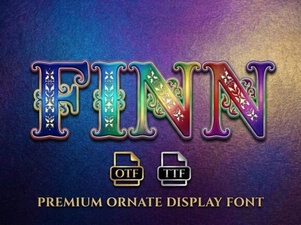 Finn Font: Design Ideas for Modern Projects
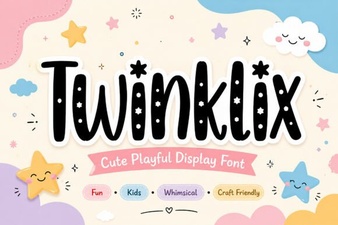 Twinklix Font: Creative Design Projects & Ideas
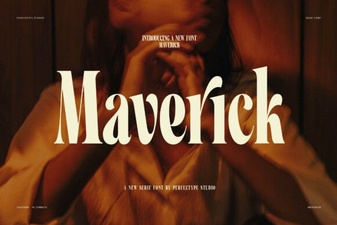 Maverick Font: Creative Design Ideas & Tips
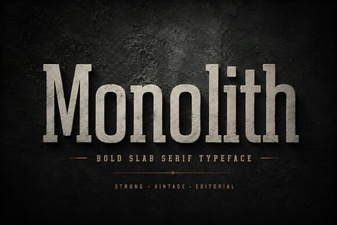 Monolith Font: Design & Usage Guide for Creative Projects
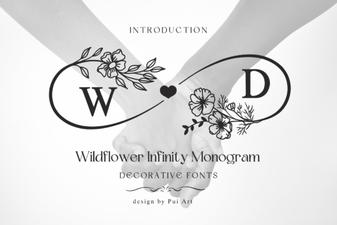 Monogram Font Ideas for Modern Craft Projects
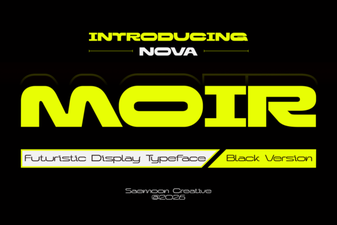 Nova Moir Font: Creative Design Projects & Ideas